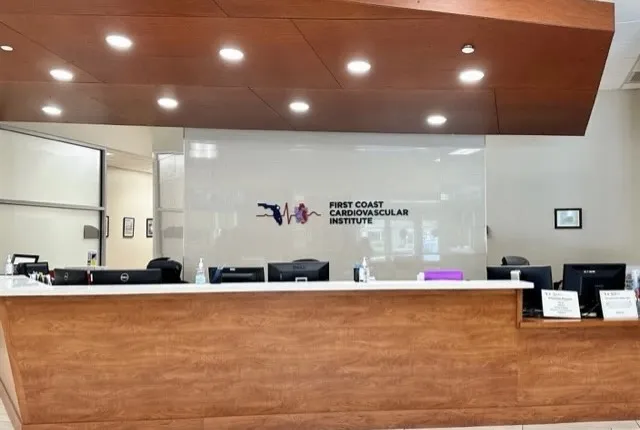
A cath lab day at FCCI's Palatka office usually means arriving fasting, a procedure of 1 to 3 hours through a small opening in the wrist or groin, and 1 to 5 hours of recovery in a private room. Then a driver takes you home. FCCI opened this outpatient lab in 2016, and it is accredited by the Accreditation Association for Ambulatory Health Care.
Knowing what is coming makes the day easier. Here is a plain walk-through. Always follow the exact instructions your own care team gives you.
Why your doctor ordered a cath
A catheterization lets your doctor see inside your arteries using a thin, flexible tube and special X-ray equipment. It can show blockages in the heart, legs, kidneys, neck and other arteries. In many cases, the doctor can also treat a blockage during the same procedure. FCCI's cath labs do diagnostic heart caths, carotid and peripheral angiography, leg artery treatments, dialysis access care, venous filters and PICC lines.
The night before
- If your procedure starts before noon, do not eat or drink anything after midnight
- If it starts in the afternoon, a light breakfast is allowed
- You can usually take daily medicines with sips of water
- If you have diabetes, follow the special instructions your team gives you
- Line up a driver for the whole day
If you take blood thinners, ask your team ahead of time what to do. Do not stop any medicine on your own.
During the procedure
The start time is an estimate. Some cases before yours may take longer than planned because of how sick a patient is. Bring a little patience and something to read for your companion.
Most procedures need only a tiny incision in the wrist or groin. The procedure itself usually lasts 1 to 3 hours, depending on what your doctor finds and treats. The team will keep you as comfortable as possible and explain what is happening.
Recovery and going home
After the procedure you will rest in one of the lab's private rooms for 1 to 5 hours. How long depends on what was done. Nurses will check the access site and your vital signs. Before you leave, you will get instructions about activity, the access site and your medicines.
Follow-up testing may be needed to check results or prevent future symptoms. Your team will schedule that with you.
Why outpatient
Traditionally, all caths were done in hospitals. FCCI was the first in the region to offer them in an outpatient setting, starting in Jacksonville in 2007. The goals were lower out-of-pocket costs and a more comfortable, convenient setting. The Palatka lab brought that same model to Putnam County.
After you go home, call 911 for chest pain, heavy bleeding at the access site that will not stop with pressure, or trouble breathing.
Questions to ask at your visit
Before your cath procedure, it helps to ask:
- Which medicines should I stop or keep before the procedure?
- Will you go through my wrist or groin?
- Might you treat a blockage during the same procedure?
- How long should I plan to be there?
- What activity limits will I have afterward?
Care close to home in Palatka
Having the cath lab in Palatka matters most on procedure day. Your driver waits nearby instead of in Jacksonville traffic, and recovery ends with a short ride home. FCCI opened the region's first freestanding cath lab in 2007 and brought that model to Palatka in 2016.
Before procedure day, the front desk can confirm coverage under Medicare, Medicaid of Florida, Blue Cross Blue Shield, Aetna, Cigna, Humana, United Healthcare, Tricare and other major plans. Self-pay pricing is also available, so ask about it when you schedule.
Questions about your cath prep or start time? Call 386.325.2836, Monday to Friday, 8 a.m. to 5 p.m. If you request a visit online, keep medical details out of it and go over them by phone.