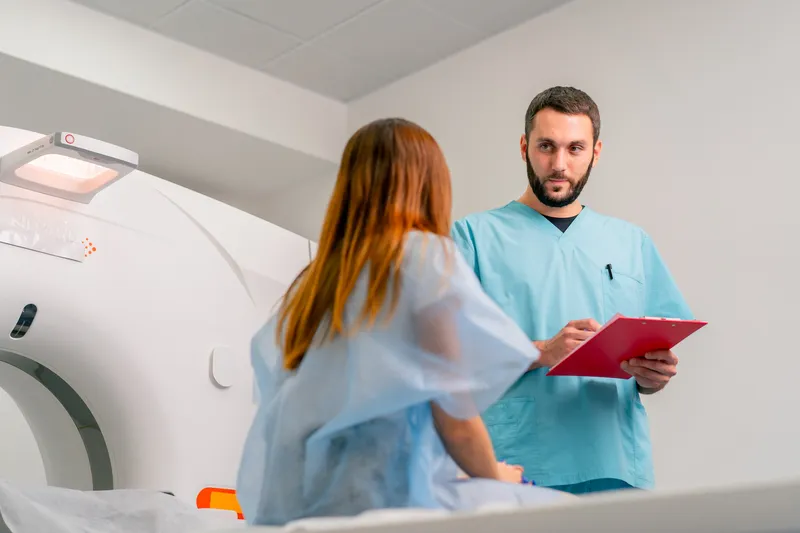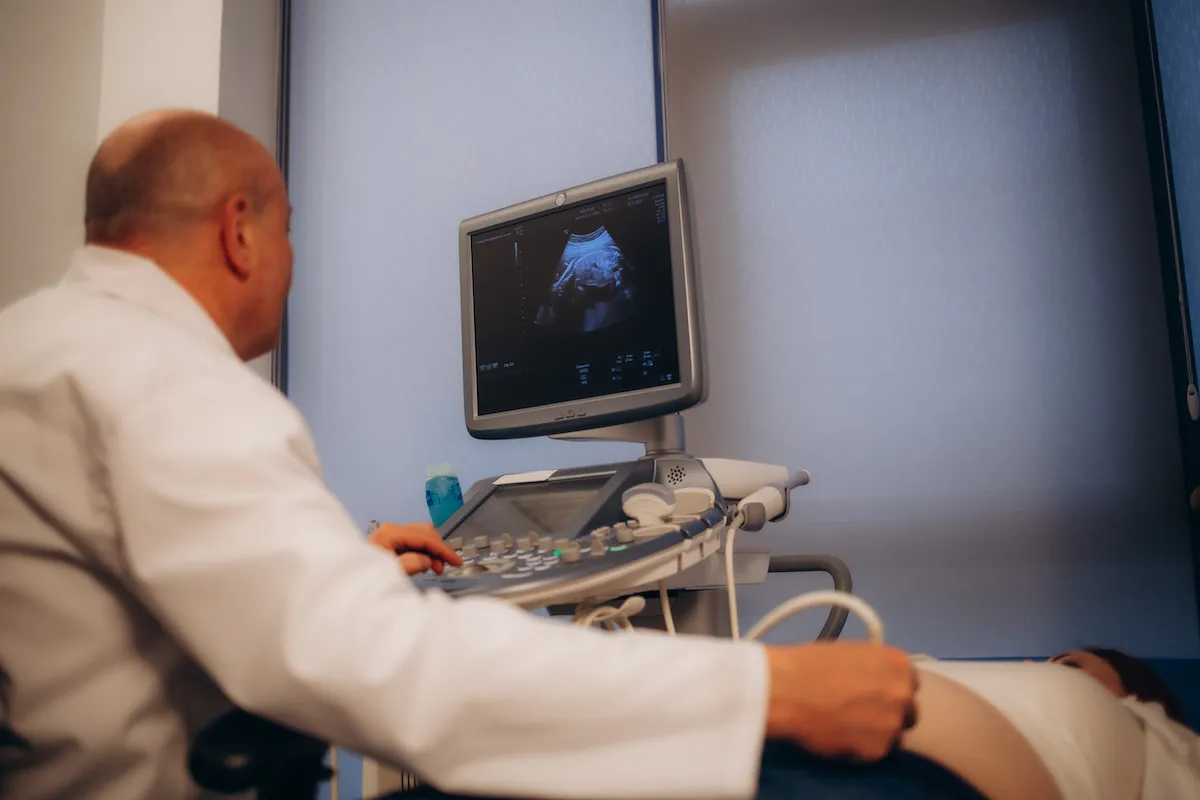
An echocardiogram, or echo, is an ultrasound of your heart. It shows how your heart moves, how well it pumps and how blood flows through the valves. It takes about 40 minutes, needs no preparation and causes no major discomfort.
Your cardiologist may order an echo to check on symptoms like shortness of breath or swelling, to follow a known valve problem, or to see how your heart is doing after treatment.
What an echo can show
- How well your heart pumps overall
- Valve disease, like leaky or narrowed valves
- Problems with the heart muscle
- Problems with the sac around the heart
- Infection on the valves
- Masses in the heart
- Heart defects present from birth
It is also used to follow valve disease over time and to see how well a surgery or valve treatment is working.
What happens during the test
A cardiac sonographer places three electrodes on your chest. They connect to an EKG monitor that tracks your heart's electrical activity. You lie on your left side on an exam table. The sonographer moves a wand, called a transducer, over several spots on your chest to take pictures from different angles.
You may be asked to change positions or hold your breath for a few seconds. For a special test that checks for small holes in the heart wall, a little salt water may be injected into an arm vein.
How it feels
Most people feel only coolness from the gel and some light pressure from the wand. There is no radiation. You can drive yourself and go back to your normal day afterward.
Getting ready
There is no special preparation for an echocardiogram. Wear a top that is easy to remove, bring your medicine list, and plan for about 40 minutes plus check-in time.
What comes next
Your FCCI provider will review the images and talk with you about the results. Depending on what they show, you may need medicine changes, another test, or simply a follow-up echo down the road to keep an eye on things. Call 386.325.2836 to ask where your echo can be scheduled.
Questions to ask at your visit
Questions worth asking about your echocardiogram:
- What are you looking for on my echo?
- How are my valves?
- What is my pumping strength?
- Do I need a repeat echo later?
- Does this change my medicines?
Care close to home in Palatka
An echo is quick and painless, so a long drive should not be the hardest part. Keeping it in Palatka makes it easier to fit into a workday and to come back for any follow-up.
Echocardiograms are typically billed through your insurance. FCCI works with Medicare, Medicaid of Florida, Blue Cross Blue Shield, Aetna, Cigna, Humana, United Healthcare and Tricare, and offers self-pay rates. Some result reviews can happen as a TeleVisit.
Why patients choose FCCI
Echocardiograms for Putnam County patients are done at 205 Zeagler Drive, Suite 101 in Palatka. The same office also has a cath lab and nuclear imaging, so if your echo points to more testing, it can often stay local.
FCCI, caring for Northeast Florida since 2002 with more than 30 providers, will go over your echo results with you. If you are ever admitted to HCA Florida Putnam Hospital, FCCI physicians cover there day and night.
Curious whether you need an echo? Call 386.325.2836, weekdays 8 a.m. to 5 p.m., or request a visit online. Please keep your symptoms out of the form and share them on the phone.